Annona reticulata var San Pablo
Family / Familie: Annonaceaeorigin from / Herkunft: South America / SüdamerikaClimate / Klima: temperate to warm (15-25C / 60-77F) / gemäßigt bis warm (15-25C / 60-77F)Use / Verwendung: edible fruits, juice, jam, ice cream, etc. / essbare Früchte, Säfte, Marmelade, Eis usw.you buy / sie kaufen: 1 germinated seed / 1 gekeimter Samen
Delivery worldwideThe Purple Treasure: Annona reticulata var. San PabloAnnona reticulata var. San Pablo, also known as Fernandez, is a botanical rarity celebrated for its intense coloration. This variety plays a key role in modern plant breeding, serving as a parent for the prestigious Temoylata 47-18 hybrid. Unlike common varieties, the San Pablo is distinguished by its deep red skin and equally dark red flesh.The fruit offers a complex flavor profile, often described as a blend of custard, ripe banana, mango, and pineapple. Its texture is wonderfully soft and creamy, with significantly less grittiness than other Annona species. The striking red pulp is typically enjoyed fresh by scooping it out, with the black seeds easily removed. It is also an excellent ingredient for desserts, ice cream, or exotic milkshakes.Care and CultivationAnnona reticulata is a subtropical plant and is not frost-hardy. It must be kept as a container plant and overwintered in a frost-free environment. The plant requires a bright to full sun, warm, and sheltered location. A greenhouse, conservatory, or a sunny spot outdoors during summer is ideal.Optimal growth temperatures range between 15 and 27 degrees Celsius. The plant cannot tolerate frost, with an absolute minimum temperature of about 3 degrees Celsius. The soil should be nutrient-rich, well-draining, and slightly acidic. Waterlogging must be strictly avoided, as the roots are very sensitive to excess moisture.Regular watering is essential to keep the soil consistently moist but not wet. During the growth and fruiting periods, deep and plentiful watering is required, while watering is reduced in winter. The plant should be overwintered in a bright spot at approximately 10 to 15 degrees Celsius. During cooler overwintering, the plant often sheds its leaves, which regrow reliably in spring.Die purpurrote Kostbarkeit: Annona reticulata var. San PabloDie Annona reticulata var. San Pablo, auch unter dem Namen Fernandez bekannt, ist eine botanische Besonderheit, die vor allem durch ihre intensive Färbung besticht. Diese Sorte spielt eine Schlüsselrolle in der modernen Pflanzenzucht und ist beispielsweise ein Elternteil der begehrten Kreuzung Temoylata 47-18. Im Gegensatz zu herkömmlichen Sorten zeichnet sich die San Pablo durch eine tiefrote Schale und ein ebenso dunkelrotes Fruchtfleisch aus.Die Frucht beeindruckt mit einem komplexen Geschmacksprofil, das oft als Mischung aus Vanillepudding, reifer Banane, Mango und Ananas beschrieben wird. Die Textur ist wunderbar weich, puddingartig und im Vergleich zu anderen Annona-Arten deutlich weniger körnig. Das markante, rote Fruchtfleisch wird typischerweise roh ausgelöffelt, wobei die schwarzen Kerne leicht entfernt werden können. Es eignet sich zudem hervorragend für die Veredelung von Desserts, Eiscreme oder exotischen Milchshakes.Haltung und PflegeDie Annona reticulata ist eine subtropische Pflanze und nicht winterhart. Sie muss daher als Kübelpflanze gehalten und frostfrei überwintert werden. Die Pflanze benötigt einen hellen bis vollsonnigen, warmen und windgeschützten Platz. Ideal ist die Aufstellung in einem Gewächshaus, einem Wintergarten oder während der Sommermonate an einem sonnigen Platz im Freien.Die optimale Wachstumstemperatur liegt zwischen 15 Grad und 27 Grad. Die Pflanze verträgt keinen Frost, das absolute Temperaturminimum liegt bei etwa 3 Grad. Der Boden sollte nährstoffreich, gut durchlässig und leicht sauer sein. Staunässe muss unbedingt vermieden werden, da die Wurzeln sehr empfindlich darauf reagieren.Es ist wichtig, die Pflanze regelmäßig zu gießen, sodass der Boden stets gleichmäßig feucht, aber nicht nass ist. Während der Wachstums- und Fruchtperiode muss tief und reichlich gewässert werden, im Winter werden die Wassergaben reduziert. Die Pflanze sollte hell bei etwa 10 bis 15 Grad überwintert werden. Bei einer kühleren Überwinterung wirft sie oft ihre Blätter ab, die im Frühjahr zuverlässig wieder austreiben.
Annona reticulata var Orange
Family / Familie: Annonaceaeorigin from / Herkunft: South America / SüdamerikaClimate / Klima: temperate to warm (15-25C / 60-77F) / gemäßigt bis warm (15-25C / 60-77F)Use / Verwendung: edible fruits, juice, jam, ice cream, etc. / essbare Früchte, Säfte, Marmelade, Eis usw.you buy / sie kaufen: 1 germinated seed / 1 gekeimter Samen
Delivery worldwideThe Annona reticulata var. Orange is distinguished by its intense flavor and striking yellow-orange appearance.The fruit is known for its sweet, creamy, and juicy white flesh.The flavor is often described as a complex blend of vanilla custard, banana, mango, and pineapple.The texture is soft, pudding-like, and less grainy compared to other Annona species.The flesh is typically eaten raw (scooped out with a spoon, removing the black seeds) or processed into desserts, ice cream, and milkshakes.Cultivation and CareThe Annona reticulata is a subtropical plant and not frost-tolerant.Therefore, it must be grown in a container and overwintered indoors.The plant requires a bright to full sun, warm, and sheltered location. A greenhouse, conservatory, or a sunny spot outdoors in the summer is ideal.The optimal growing temperature is between 15 °C and 27 °C. The plant cannot tolerate frost; the minimum temperature is approximately 3 °C.The soil should be nutrient-rich, well-draining, and slightly acidic (pH 5-8).Waterlogging must be avoided at all costs, as the plant is very sensitive to it.It is important to water the plant regularly so that the soil is always evenly moist but not wet.During the growing and fruiting period, water deeply and thoroughly; in winter, watering is reduced.The plant must be overwintered in a bright, frost-free location at approximately 10-15 °C. If overwintered in a cooler location, the plant often sheds its leaves (semi-deciduous), which regrow in the spring.Die Annona reticulata var Orange zeichnet sich durch ihren intensiven Geschmack und ihr markantes, gelb-orangenes Aussehen aus. Die Frucht ist bekannt für ihr süßes, cremiges und saftiges Fruchtfleisch, das eine weiße Farbe aufweist.Der Geschmack wird oft als eine komplexe Mischung aus Vanillepudding, Banane, Mango und Ananas beschrieben.Die Textur ist weich, puddingartig und im Vergleich zu anderen Annona-Arten weniger körnig.Das Fruchtfleisch wird typischerweise roh gegessen (ausgelöffelt, wobei die schwarzen Kerne entfernt werden) oder zu Desserts, Eiscreme und Milchshakes verarbeitet.Haltung und PflegeDie Annona reticulata ist eine subtropische Pflanze und nicht winterhart.Sie muss daher als Kübelpflanze gehalten und überwintert werden.Die Pflanze benötigt einen hellen bis vollsonnigen, warmen und windgeschützten Platz. Ideal ist ein Gewächshaus, Wintergarten oder im Sommer ein sonniger Platz im Freien.Die optimale Wachstumstemperatur liegt zwischen 15 °C und 27 °C. Die Pflanze verträgt keinen Frost, das Temperaturminimum liegt bei etwa 3 °C.Der Boden sollte nährstoffreich, gut durchlässig und leicht sauer (pH 5-8) sein. Staunässe muss unbedingt vermieden werden, da die Pflanze sehr empfindlich darauf reagiert.Es ist wichtig, die Pflanze regelmäßig zu gießen, sodass der Boden stets gleichmäßig feucht, aber nicht nass ist. Während der Wachstums- und Fruchtperiode muss tief und reichlich gewässert werden; im Winter werden die Wassergaben reduziert. Die Pflanze muss hell und frostfrei bei ca. 10-15 °C überwintert werden. Bei einer kühleren Überwinterung wirft die Pflanze oft ihre Blätter ab (semi-dezidiert), die im Frühjahr nachwachsen.
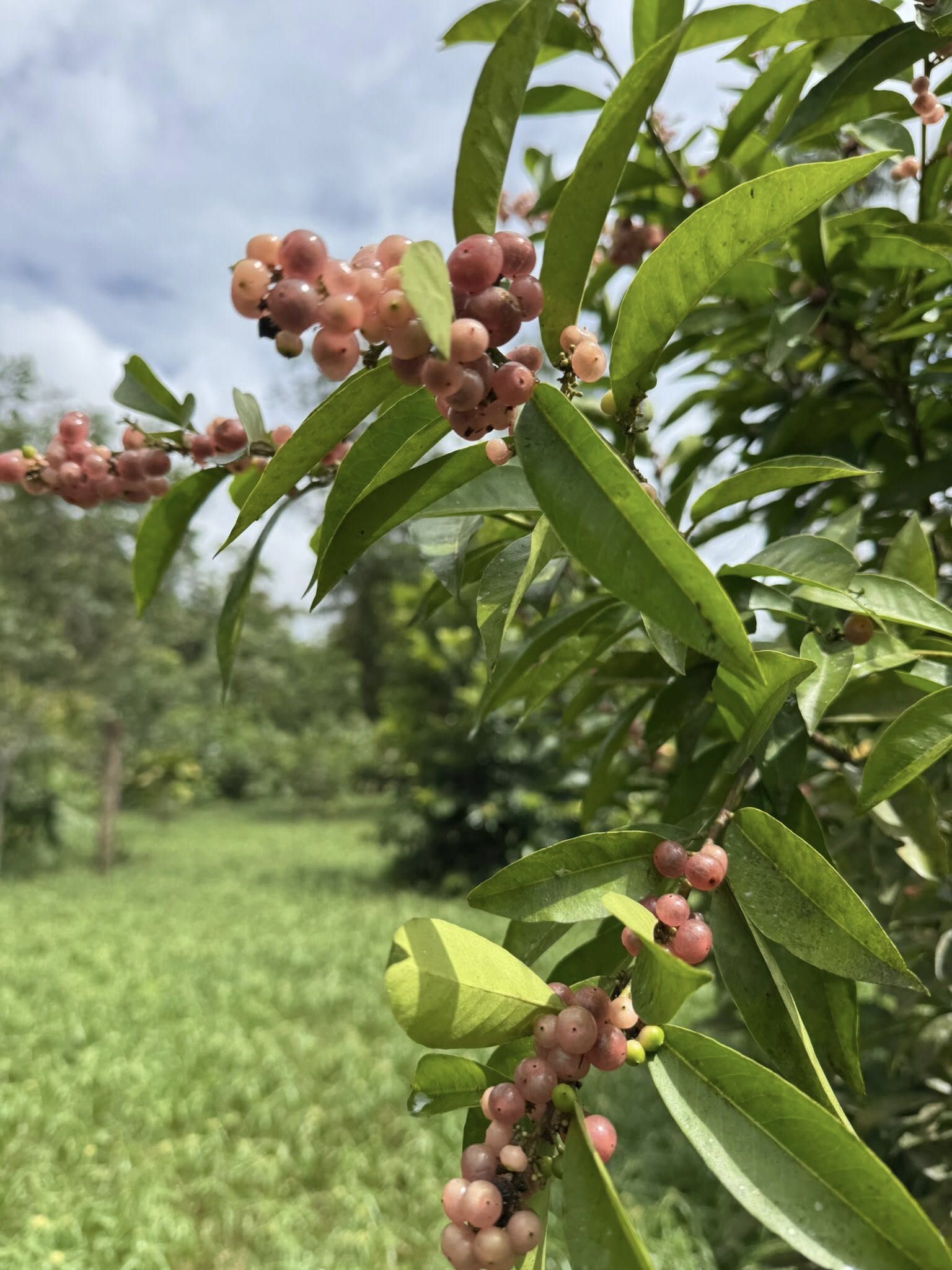
Glycosmis pentaphylla - Orangeberry
Family / Familie: Rutaceaeorigin from / Herkunft: South Asia / SüdasienClimate / Klima: temperate to warm (10-25C / 50-77F) / gemäßigt bis warm (10-25C / 50-77F)Taste / Geschmack: good taste / guter Geschmackyou buy / sie kaufen: 1 small seedling / 1 kleiner Sämling
Delivery EU only
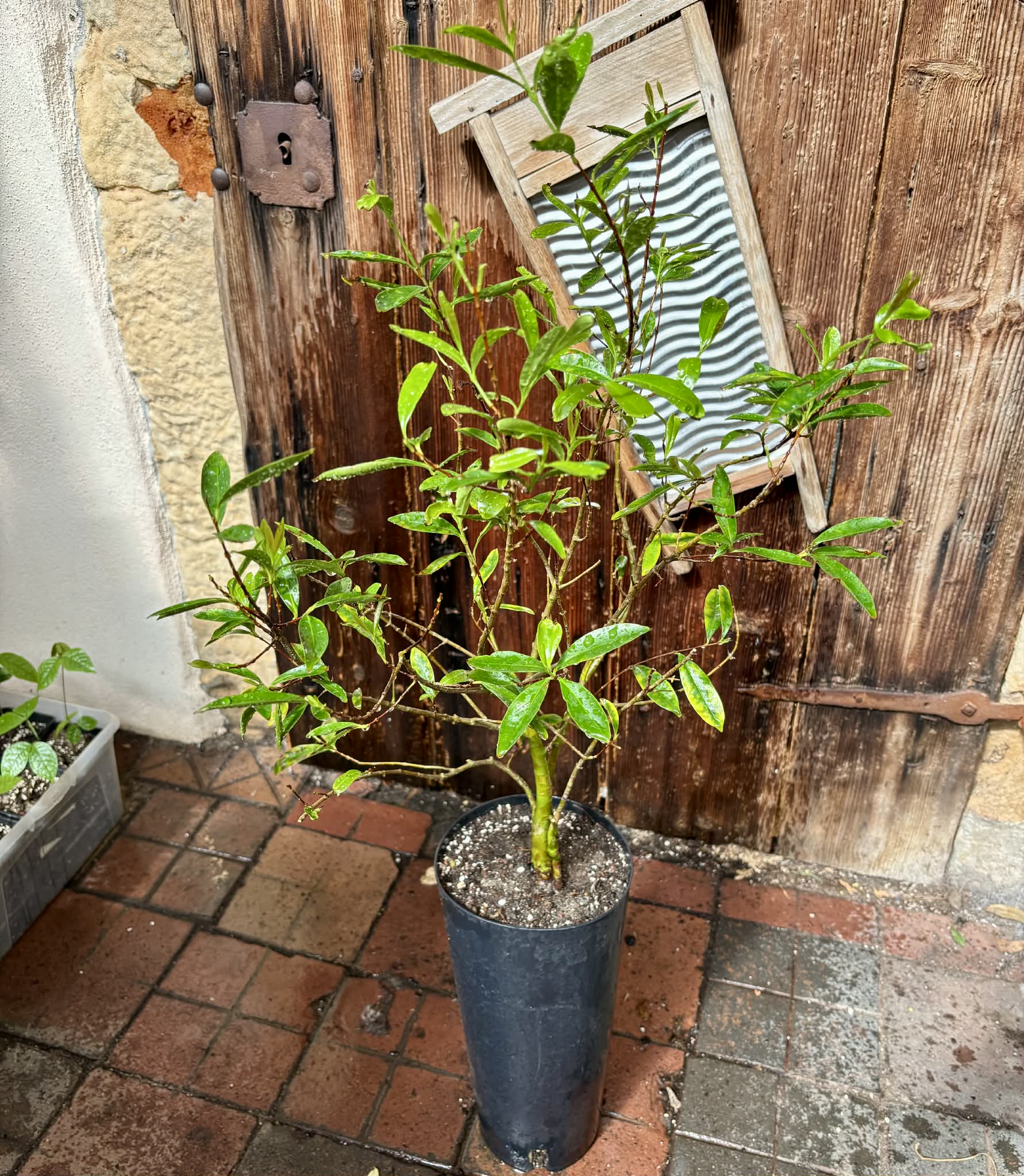
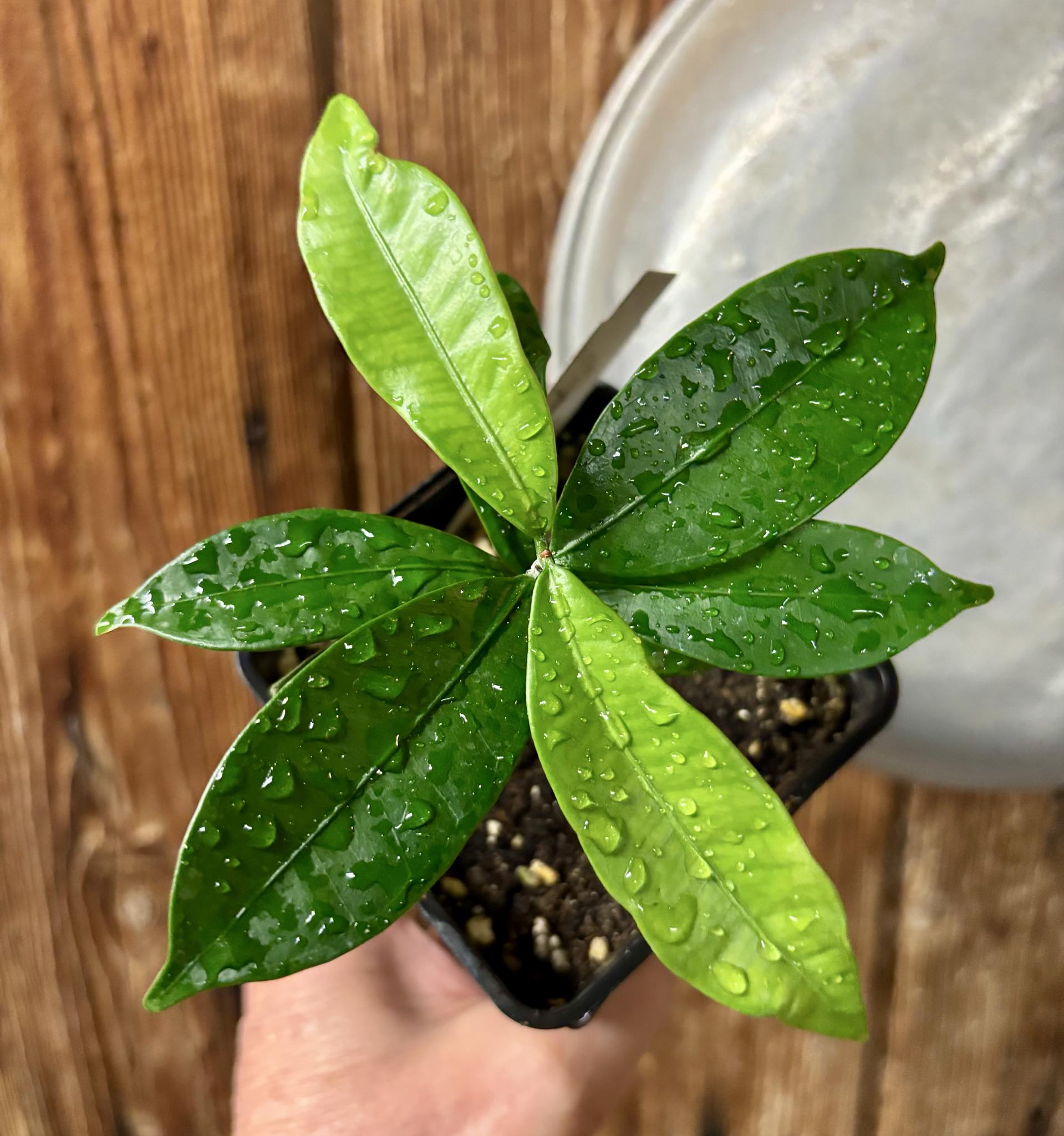
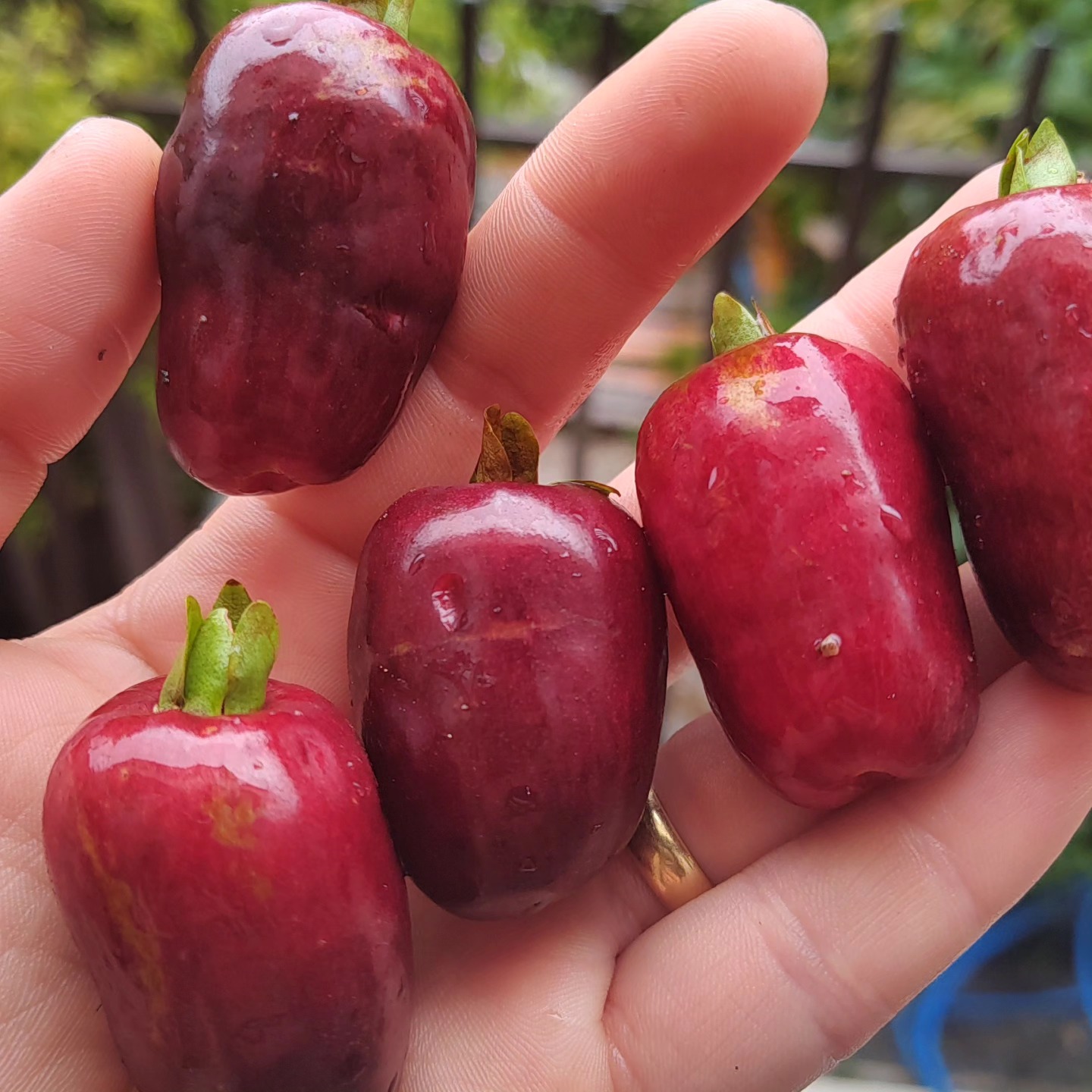
you get 3 plants in 1 potThis small tree comes from South Asia.It grows to a maximum height of 5m. Therefore, this plant is well suited for pot cultivation.The small pink berries are sweet and juicy and taste slightly reminiscent of gin.This plant is also used medicinally in all its components.Please overwinter this plant at at least 10 degrees.
Ihr bekommt 3 Pflanzen in einem TopfDieser kleine Baum stammt aus Süd-Asien.Er wird maximal 5m hoch. Daher ist diese Pflanze gut für eine Topfkultur geeignet.Die kleinen rosafarbenen Beeren sind süß und saftig und erinnern im Geschmack leicht an Gin.Diese Pflanze wird in allen Bestandteilen auch medizinisch verwendet.Überwintern dieser Pflanze bitte bei mindestens 10 Grad.
Pitangatuba (Eugenia selloi)
Family / Familie: Myrtaceaeorigin from / Herkunft: South Brasil, Southeast Brasil / Südbrasilien, SüdostbrasilienClimate / Klima: temperate to warm (10-30C / 50-86F) / gemäßigt bis warm (10-30C / 50-86F)Use / Verwendung: edible fruits, juice, jam, ice cream, etc. / essbare Früchte, Säfte, Marmelade, Eis usw.you buy / sie kaufen: 1 fresh seed / 1 frischer SamenDelivery worldwide
Pre-order - these fresh seeds will be delivered at the beginning of May.The Pitangatuba (Eugenia selloi) is a beautiful fruit from the large Eugenia family.It originally comes from Brazil and is now grown by enthusiasts all over the world.This Eugenia is very easy to care for and is flowering for the first time in our country after about 3 years.We have already been able to harvest and taste the fruit ourselves.They are very juicy, sour and sweet. You can taste many different flavors and you can eat them raw or make them into juice or ice cream.This Eugenia can tolerate short-term cold, but please overwinter at a minimum of 10 degrees.This is a pre-order, as the fresh seeds will not be delivered until the beginning of May.Since the seeds are reserved specifically for you, the "Additional Order" option is not available for this item.Please select the standard shipping costs of €4 within Germany or €8 for international shipping during checkout.Vorbestellung - die Lieferung dieser frischen Samen erfolgt Anfang Mai.Die Pitangatuba (Eugenia selloi) ist eine wunderschöne Frucht aus der großen Familie der Eugenien.Sie stammt ursprünglich aus Brasilien und wird mittlerweile von Liebhabern weltweit angebaut.Diese Eugenia ist sehr leicht in der Haltung und blüht auch bei uns nach ca. 3 Jahren das erste mal.Wir selbst konnten bereits Früchte ernten und probieren.Sie sind sehr saftig, sauer und süß. Man schmeckt viele verschiedene Geschmacksrichtungen und kann sie roh essen oder zu Saft oder Eis verarbeiten.Diese Eugenia verträgt kurzfristig Kälte, dennoch bitte bei mindestens 10 Grad überwintern.Es handelt sich hierbei um eine Vorbestellung, da die Auslieferung der frischen Samen erst Anfang Mai erfolgt.Da die Samen frisch für dich reserviert werden, ist die Option "Zusatzbestellung" für diesen Artikel nicht verfügbar.Bitte wähle im Bestellvorgang die regulären Versandkosten von 4 EUR innerhalb Deutschlands bzw. 8 EUR für den internationalen Versand aus.
Plinia aureana
Family / Familie: Myrtaceaeorigin from / Herkunft: Brasilien Climate / Klima: temperate (10-30C / 50-84F) / gemäßigt (10-30C / 50-84F) Use / Verwendung: edible fruits, juice, jam, ice cream, etc. / essbare Früchte, Säfte, Marmelade, Eis usw.you buy / sie kaufen: 1 fresh seed / 1 frischer Samen
Delivery worldwidePre-order - these fresh seeds will be delivered at the beginning of May.Plinia aureana, also known as Jaboticaba Branca is one of the most exclusive and rarest species within the Myrtaceae family.Unlike the more common black Jaboticabas, this species impresses with its light green to yellowish fruits, which retain their pale color even when fully ripe.The pulp is snow-white, extremely juicy, and possesses an extraordinary sweetness, often compared to the delicate flavor of honey or sweet apple candies.A special benefit for enthusiasts is the very thin and tender skin, which contains far fewer tannins than other varieties and can be eaten without hesitation.The plant grows as a compact shrub or small tree and is known for its early precocity, with trees often starting to fruit just a few years after planting.Characteristic is its cauliflory, where the fragrant white flowers and later the fruits appear directly on the trunk and main branches.The young leaves often display a beautiful reddish to bronze tint upon emergence, giving the plant high ornamental value.Due to its moderate growth and hardiness, it is an ideal candidate for container cultivation on terraces or in conservatories.It prefers a sunny to partially shaded location and requires an acidic, humus-rich substrate that should be kept consistently moist.As a subtropical beauty, it is quite adaptable but should be overwintered in a bright, frost-free spot at temperatures around 10 degrees Celsius (50 degrees Fahrenheit) to maintain its vitality.This is a pre-order, as the fresh seeds will not be delivered until the beginning of May.Since the seeds are reserved specifically for you, the "Additional Order" option is not available for this item.Please select the standard shipping costs of €4 within Germany or €8 for international shipping during checkout.Vorbestellung - die Lieferung dieser frischen Samen erfolgt Anfang Mai.Die Plinia aureana, auch als Jaboticaba Branca bekannt, ist eine der exklusivsten und seltensten Arten innerhalb der Familie der Myrtengewächse.Im Gegensatz zu den bekannteren schwarzen Jaboticabas besticht diese Art durch ihre hellgrünen bis gelblichen Früchte, die selbst im vollreifen Zustand ihre helle Farbe behalten.Das Fruchtfleisch ist schneeweiß, extrem saftig und besitzt eine außergewöhnliche Süße, die oft mit dem feinen Aroma von Honig oder süßen Apfelbonbons verglichen wird.Ein besonderer Vorteil für Genießer ist die sehr dünne und zarte Schale, die im Vergleich zu anderen Sorten kaum Gerbstoffe enthält und problemlos mitgegessen werden kann.Die Pflanze wächst als kompakter Strauch oder kleiner Baum und ist für ihre frühe Ertragsfähigkeit bekannt, wobei veredelte Exemplare oder Sämlinge unter guten Bedingungen schon nach wenigen Jahren fruchten.Charakteristisch ist die Kauliflorie, bei der die duftenden weißen Blüten und später die Früchte direkt am Stamm und an den Hauptästen erscheinen.Die jungen Blätter zeigen beim Austrieb oft einen wunderschönen rötlichen bis bronzefarbenen Ton, was der Pflanze zusätzlich einen hohen Zierwert verleiht.Aufgrund ihres moderaten Wuchses und ihrer Robustheit ist sie die ideale Kandidatin für die Haltung im Kübel auf der Terrasse oder im Wintergarten.Sie bevorzugt einen sonnigen bis halbschattigen Standort und benötigt ein saures, humoses Substrat, das stets gleichmäßig feucht gehalten werden sollte.Als subtropische Schönheit ist sie recht anpassungsfähig, sollte jedoch bei Temperaturen ab etwa 10 Grad Celsius hell und frostfrei überwintert werden, um ihre Vitalität zu erhalten.Es handelt sich hierbei um eine Vorbestellung, da die Auslieferung der frischen Samen erst Anfang Mai erfolgt.Da die Samen frisch für dich reserviert werden, ist die Option "Zusatzbestellung" für diesen Artikel nicht verfügbar.Bitte wähle im Bestellvorgang die regulären Versandkosten von 4 EUR innerhalb Deutschlands bzw. 8 EUR für den internationalen Versand aus.
Myrciaria vexator - Blue Jaboticaba
Family / Familie: Myrtaceaeorigin from / Herkunft: South America / SüdamerikaClimate / Klima: temperate to warm (10-30C / 50-86F) / gemäßigt bis warm (10-30C / 50-86F)Use / Verwendung: edible fruits, juice, jam, ice cream, etc. / essbare Früchte, Säfte, Marmelade, Eis usw.you buy / sie kaufen: 1 fresh seed / 1 frischer Samen
Delivery worldwide
Pre-order - these fresh seeds will be delivered at the beginning of May.Myrciaria vexator is a rare and highly esteemed relative of the Jaboticaba, originally native to parts of Central America and northern South America.It owes its striking name "Blue Grape" to the beautiful, deep blue to almost violet-black glossy fruits that ripen in dense clusters directly on the branches.The fruits have a smooth, firm skin and a translucent, juicy pulp that tastes like a blend of sweet grapes and exotic berries.A special feature is the complex flavor profile, which offers a perfect balance between intense sweetness and a very subtle, spicy undertone.In the culinary world, the Blue Grape is not only enjoyed fresh but also serves as an excellent base for gourmet jellies and high-quality juices due to its color and aroma.The tree grows rather slowly, forming a very dense, bushy canopy with glossy dark green leaves, providing it with exceptional ornamental value.Like many Myrciarias, the Vexator is cauliflorous, meaning the delicate white flowers appear directly on the wood, potentially transforming the tree into a sea of blossoms.Due to its compact growth habit, it is one of the best species for long-term cultivation as a container plant on terraces or in bright conservatories.It prefers a sunny to partially shaded location and well-drained, slightly acidic substrate that should be kept consistently moist.Despite its tropical origin, it shows good adaptability and should be overwintered frost-free in a bright spot at a minimum of 12 to 15 degrees Celsius (54 to 59 degrees Fahrenheit).This is a pre-order, as the fresh seeds will not be delivered until the beginning of May.Since the seeds are reserved specifically for you, the "Additional Order" option is not available for this item.Please select the standard shipping costs of €4 within Germany or €8 for international shipping during checkout.Vorbestellung - die Lieferung dieser frischen Samen erfolgt Anfang Mai.Die Myrciaria vexator ist eine seltene und hochgeschätzte Verwandte der Jaboticaba, die ursprünglich aus den Gebieten Zentralamerikas und dem nördlichen Südamerika stammt.Ihren markanten Namen „Blue Grape“ verdankt sie den wunderschönen, tiefblau bis fast violett-schwarz glänzenden Früchten, die in dichten Clustern direkt an den Zweigen reifen.Die Früchte haben eine glatte, feste Schale und ein lichtdurchlässiges, saftiges Fruchtfleisch, das geschmacklich an eine Mischung aus süßen Trauben und exotischen Beeren erinnert.Ein besonderes Merkmal ist das komplexe Aroma, das eine perfekte Balance zwischen intensiver Süße und einer ganz dezenten, würzigen Note bietet.In der Küche wird die Blue Grape nicht nur frisch verzehrt, sondern ist aufgrund ihrer Farbe und ihres Aromas auch eine exzellente Basis für Gourmet-Gelees und hochwertige Säfte.Der Baum wächst eher langsam und bildet eine sehr dichte, buschige Krone mit glänzenden, dunkelgrünen Blättern aus, was ihm einen außergewöhnlich hohen Zierwert verleiht.Wie viele Myrciarien ist auch die Vexator kauliflor, was bedeutet, dass die zierlichen weißen Blüten direkt am Holz erscheinen und den Baum in ein Meer aus Blüten verwandeln können.Durch ihren kompakten Wuchs ist sie eine der besten Arten für die langfristige Haltung als Kübelpflanze auf der Terrasse oder im hellen Wintergarten.Sie bevorzugt einen sonnigen bis halbschattigen Platz und ein gut durchlässiges, leicht saures Substrat, das regelmäßig feucht gehalten werden sollte.Obwohl sie tropischen Ursprungs ist, zeigt sie eine gute Anpassungsfähigkeit und sollte frostfrei an einem hellen Standort bei mindestens 12 bis 15 Grad Celsius überwintert werden.Es handelt sich hierbei um eine Vorbestellung, da die Auslieferung der frischen Samen erst Anfang Mai erfolgt.Da die Samen frisch für dich reserviert werden, ist die Option "Zusatzbestellung" für diesen Artikel nicht verfügbar.Bitte wähle im Bestellvorgang die regulären Versandkosten von 4 EUR innerhalb Deutschlands bzw. 8 EUR für den internationalen Versand aus.
Annona xylopifoliaFamily / Familie: Annonaceaeorigin from / Herkunft: Brasil / BrasilienClimate / Klima: temperate (10-30C / 50-84F) / gemäßigt (10-30C / 50-84F) Use / Verwendung: edible fruits, juice, jam, ice cream, etc. / essbare Früchte, Säfte, Marmelade, Eis usw.you buy / sie kaufen: 1 fresh seed / 1 frischer SamenDelivery worldwidePre-order - these fresh seeds will be delivered at the beginning of May.Annona xylopifolia is an extraordinary member of the Annonaceae family, native to the seasonal forests and semi-deciduous formations of the Brazilian Atlantic Forest.Its botanical name is derived from the resemblance of its leaves to those of the genus Xylopia, giving it a very elegant and distinctive appearance.The fruits are characterized by green to yellowish skin with a unique, irregularly warty texture that collectors find particularly primeval and appealing.Inside, the fruit reveals white, creamy pulp that impresses with an exquisite aroma and a pleasant, well-balanced sweetness.In its native land, it is highly valued for the quality of its fruit, which is typically enjoyed fresh or used to create gourmet juices.The tree usually grows to a medium size and forms a harmonious canopy, making it a decorative addition to any garden or conservatory.This species proves to be remarkably adaptable and thrives well even in locations with lower humidity or under full sun exposure.Due to its moderate growth rate, it can be maintained exceptionally well in large containers with appropriate pruning, making it ideal for flexible cultivation.The plant prefers deep, humus-rich substrate but shows remarkable tolerance toward various soil conditions.As a subtropical species, it tolerates cooler periods significantly better than strictly tropical species, with a recommended minimum overwintering temperature of around 10 degrees Celsius (50 degrees Fahrenheit).This is a pre-order, as the fresh seeds will not be delivered until the beginning of May.Since the seeds are reserved specifically for you, the "Additional Order" option is not available for this item.Please select the standard shipping costs of €4 within Germany or €8 for international shipping during checkout.Vorbestellung - die Lieferung dieser frischen Samen erfolgt Anfang Mai.Die Annona xylopifolia ist ein außergewöhnliches Annonengewächs, das in den saisonalen Wäldern und semidezidublen Formationen des brasilianischen Mata Atlântica beheimatet ist.Ihr botanischer Name leitet sich von der Ähnlichkeit ihrer Blätter mit der Gattung Xylopia ab, was ihr ein sehr elegantes und markantes Erscheinungsbild verleiht.Die Früchte zeichnen sich durch eine grüne bis gelbliche Schale mit einer einzigartigen, unregelmäßig gewarzten Struktur aus, die unter Sammlern als besonders urwüchsig gilt.Das Innere der Frucht birgt ein weißes, cremiges Fruchtfleisch, das durch ein exquisites Aroma und eine angenehme, balancierte Süße überzeugt.In ihrer Heimat wird sie für die hohe Qualität ihrer Früchte geschätzt, die meist direkt frisch verzehrt oder für die Zubereitung von Gourmet-Säften verwendet werden.Der Baum wächst meist mittelgroß und bildet eine harmonische Krone, was ihn zu einer dekorativen Bereicherung für jeden Garten oder Wintergarten macht.Diese Art erweist sich als ausgesprochen anpassungsfähig und gedeiht auch an Standorten mit geringerer Luftfeuchtigkeit oder in voller Sonne sehr gut.Durch ihren moderaten Wuchs lässt sie sich mit dem entsprechenden Rückschnitt hervorragend in großen Kübeln halten und ist somit ideal für eine flexible Kultur geeignet.Die Pflanze bevorzugt ein tiefgründiges, humusreiches Substrat, zeigt sich aber gegenüber verschiedenen Bodenbeschaffenheiten als bemerkenswert tolerant.Als subtropische Spezies verträgt sie kühlere Perioden deutlich besser als rein tropische Arten, wobei für eine sichere Überwinterung Temperaturen ab etwa 10 Grad Celsius empfohlen werden.Es handelt sich hierbei um eine Vorbestellung, da die Auslieferung der frischen Samen erst Anfang Mai erfolgt.Da die Samen frisch für dich reserviert werden, ist die Option "Zusatzbestellung" für diesen Artikel nicht verfügbar.Bitte wähle im Bestellvorgang die regulären Versandkosten von 4 EUR innerhalb Deutschlands bzw. 8 EUR für den internationalen Versand aus.
Annona montana - Mountain SoursopFamily / Familie: Annonaceaeorigin from / Herkunft: South AmericaClimate / Klima: temperate to warm (15-25C / 60-77F) / gemäßigt bis warm (15-25C / 60-77F)Use / Verwendung: edible fruits, juice, jam, ice cream, etc. / essbare Früchte, Säfte, Marmelade, Eis usw.you buy / sie kaufen: 1 potted plant / 1 getopfte Pflanze
Delivery EU onlyWe grew this custard apple from seed.It is one of the best rootstocks for grafting annonas.It grows quickly and is very resistant to disease, light frost and thrives in many types of soil.The fruits are edible and resemble a soursop.The leaves are also similar to the soursop but do not smell when rubbed.Please overwinter at a minimum of 10 degrees, even if it can tolerate colder temperatures.Diese Annone wurde von uns aus Samen gezogen.Es ist eine der besten Unterlagen für Veredlungen von Annonas. Sie wächst schnell und ist sehr resistent gegen Krankheiten, leichten Frost und gedeiht auf vielen Böden.Die Früchte sind essbar und ähneln einer Stachelannone. Auch die Blätter sind ähnlich der Stachelannone aber riechen nicht wenn man sie reibt.Bitte bei mindestens 10 Grad überwintern auch wenn sie es kälter verträgt.
Eugenia hirta
Family / Familie: Myrtaceaeorigin from / Herkunft: Brasil / BrasilienClimate / Klima: temperate to warm (10-25C / 50-77F) / gemäßigt bis warm (10-25C / 50-77F)Use / Verwendung: edible fruits, juice, jam, ice cream, etc. / essbare Früchte, Säfte, Marmelade, Eis usw.you buy / sie kaufen: 1 potted seedling/ 1 getopfter Sämling
Delivery only EU
This Eugenia is something special.Hardly any Eugenia is able to bloom as early as this little pearl.It can produce flowers after just 1 year.The orange fruits are small but very tasty.They are juicy and very sweet. No astringency or unpleasant acidity.The tree grows quickly and has beautiful leaves.This Eugenia is ideal for keeping in a pot.Please overwinter at at least 10 degrees.Diese Eugenia ist etwas Besonderes.Kaum eine Eugenia ist in der Lage so zeitig zu blühen wie diese kleine Perle.Bereits nach 1 Jahr kann sie Blüten ansetzen.Die orangenen Früchte sind zwar klein aber sehr lecker.Sie sind saftig und sehr süß. Keine Adstringens oder unangenehme Säure.Der Baum wächst schnell und bekommt schöne Blätter.Diese Eugenia ist hervorragend für eine Kübelhaltung geeignet.Bitte bei mindestens 10 Grad überwintern.
Eugenia reinwardtiana - Cedarbay Cherry
Family / Familie: Myrtaceaeorigin from / Herkunft: Australien Climate / Klima: temperate to warm (5-25C / 40-77F) / gemäßigt bis warm (5-25C / 40-77F)Use / Verwendung: edible fruits, juice, jam, ice cream, etc. / essbare Früchte, Säfte, Marmelade, Eis usw.you buy / sie kaufen: 1 potted seedling / 1 getopfter Sämling
Delivery EU onlyThis Eugenia comes from Australia.Eugenia reinwardtiana, also known as Cedar Bay Cherry, is a robust, evergreen shrub from the myrtle family.Taste & FruitAroma: The bright red fruits have juicy, velvety flesh with a sweet flavor often reminiscent of a blend of berries and grapes.Uses: They can be eaten raw or processed into jams, drinks, and sweets.Special Features: The fruits are rich in antioxidants and vitamins. With proper care, the first harvest is often possible after 3 to 4 years.Cultivation & CareThe plant is considered easy to care for and is ideally suited for container planting.Location: Prefers a sunny to partially shaded spot.In summer, it can easily be placed on a patio or balcony.Watering: Water regularly, but be sure to avoid waterlogging. The soil should be allowed to dry slightly between waterings.Soil: A well-draining substrate (e.g., high-quality garden soil with added sand) is crucial for healthy roots.Overwintering: The plant is not frost-hardy (tolerating temperatures down to approximately -0 °C for short periods) and should be overwintered in a frost-free environment at a minimum temperature of 10 °C.Diese Eugenia stammt aus Australien. Die Eugenia reinwardtiana, auch bekannt als Cedar Bay Cherry, ist ein robuster, immergrüner Strauch aus der Familie der Myrtengewächse. Geschmack & FruchtAroma: Die leuchtend roten Früchte haben ein saftiges, samtiges Fruchtfleisch mit einem süßen Geschmack, der oft an eine Mischung aus Beeren und Trauben erinnert.Verwendung: Sie können direkt roh verzehrt oder zu Konfitüren, Getränken und Süßigkeiten verarbeitet werden.Besonderheit: Die Früchte sind reich an Antioxidantien und Vitaminen. Erste Ernten sind bei guter Pflege oft schon nach 3 bis 4 Jahren möglich. Haltung & PflegeDie Pflanze gilt als pflegeleicht und ist ideal für die Kübelhaltung geeignet. Standort: Bevorzugt einen sonnigen bis halbschattigen Platz. Im Sommer kann sie problemlos auf Terrasse oder Balkon stehen.Bewässerung: Regelmäßig gießen, dabei Staunässe unbedingt vermeiden. Das Substrat sollte zwischen den Wassergaben leicht antrocknen.Boden: Ein gut durchlässiges Substrat (z. B. hochwertige Gartenerde mit Sandanteil) ist für die Wurzelgesundheit entscheidend.Überwinterung: Die Pflanze ist nicht winterhart (kurzzeitig bis ca. -0 °C) und sollte frostfrei bei mindestens 10 °C überwintert werden.
rooted cutting - Long Pepper (Piper longum)
Family / Familie: Piperaceaeorigin from / Herkunft: Asia / AsienClimate / Klima: temperate to warm (15-30C / 60-86F) / gemäßigt bis warm ( 15-30C / 60-86F )Taste / Geschmack: Spice / Gewürzyou buy / sie kaufen: 1 rooted cutting / 1 bewurzelter Steckling
Delivery EU onlyLong Pepper is a special variety of pepper, a tropical climbing plant known for its delicious peppercorns.We offer a rooted cutting from a flowering mother plant.Please leave this plant in a closed box or zip bag for at least 3 weeks so that the roots can develop faster.
Long Pepper is an ideal plant for pot cultivation, as it can thrive even in confined spaces.However, this tropical plant requires warm temperatures to thrive.
Care Instructions
Temperature: Overwinter at a minimum of +15°C (59°F).
Location: Bright and warm, ideal for a greenhouse or a sunny window spot.
Growth: Begins to grow rapidly once the plant develops its leaves.Long Pepper ist eine besondere Variante des Pfeffers, der tropischen Kletterpflanze, die bekannt ist für ihre köstlichen Pfefferfrüchte. Wir bieten Ihnen einen bewurzelten Steckling von einer blühenden Mutterpflanze.Bitte diese Pflanze noch für mindestens 3 Wochen in einer geschlossenen Box oder Zipperbeutel lassen damit sich die Wurzeln schneller entwickeln können.Der Long Pepper ist eine ideale Pflanze für den Topfanbau, da er sich auch in begrenzten Räumen gut entwickeln kann. Die tropische Pflanze benötigt jedoch warme Temperaturen, um optimal zu gedeihen.
Pflegehinweise
Temperatur: Überwinterung bei mindestens +15 °C (59 °F).
Standort: Hell und warm, ideal für ein Gewächshaus oder einen sonnigen Fensterplatz.
Wachstum: Beginnt schnell zu wachsen, sobald die Pflanze ihre Blätter entwickelt.
rooted cutting - Long Pepper (Piper longum)
Family / Familie: Piperaceaeorigin from / Herkunft: Asia / AsienClimate / Klima: temperate to warm (15-30C / 60-86F) / gemäßigt bis warm ( 15-30C / 60-86F )Taste / Geschmack: Spice / Gewürzyou buy / sie kaufen: 1 rooted cutting / 1 bewurzelter Steckling
Delivery EU onlyLong Pepper is a special variety of pepper, a tropical climbing plant known for its delicious peppercorns.We offer a rooted cutting from a flowering mother plant.Please leave this plant in a closed box or zip bag for at least 3 weeks so that the roots can develop faster.
Long Pepper is an ideal plant for pot cultivation, as it can thrive even in confined spaces.However, this tropical plant requires warm temperatures to thrive.
Care Instructions
Temperature: Overwinter at a minimum of +15°C (59°F).
Location: Bright and warm, ideal for a greenhouse or a sunny window spot.
Growth: Begins to grow rapidly once the plant develops its leaves.Long Pepper ist eine besondere Variante des Pfeffers, der tropischen Kletterpflanze, die bekannt ist für ihre köstlichen Pfefferfrüchte. Wir bieten Ihnen einen bewurzelten Steckling von einer blühenden Mutterpflanze.Bitte diese Pflanze noch für mindestens 3 Wochen in einer geschlossenen Box oder Zipperbeutel lassen damit sich die Wurzeln schneller entwickeln können.Der Long Pepper ist eine ideale Pflanze für den Topfanbau, da er sich auch in begrenzten Räumen gut entwickeln kann. Die tropische Pflanze benötigt jedoch warme Temperaturen, um optimal zu gedeihen.
Pflegehinweise
Temperatur: Überwinterung bei mindestens +15 °C (59 °F).
Standort: Hell und warm, ideal für ein Gewächshaus oder einen sonnigen Fensterplatz.
Wachstum: Beginnt schnell zu wachsen, sobald die Pflanze ihre Blätter entwickelt.
Cherry of Rio Grande (Eugenia involucrata)Family / Familie: Myrtaceaeorigin from / Herkunft: South America / SüdamerikaClimate / Klima: temperate to warm (10-30C / 50-86F) / gemäßigt bis warm (10-30C / 50-86F)Use / Verwendung: edible fruits, juice, jam, ice cream, etc. / essbare Früchte, Säfte, Marmelade, Eis usw.you buy / sie kaufen: 1 potted plant / 1 getopfte PflanzeDelivery EU onlyThis plant is just beginning to sprout anew after its winter dormancy.The name "Rio Grande" indicates that this Eugenia originally comes from the southern Brazilian state of Rio Grande do Sul.This Eugenia has no special care requirements and will also bear fruit in pots.The fruits have a very good flavor and can be eaten out of hand.This Eugenia is one of the cold-resistant varieties.In America, they survived -6 degrees Celsius!Nevertheless, I would overwinter them at a minimum of 10 degrees Celsius.
Diese Pflanze beginnt nach der Winterruhe gerade neu auszutreiben.Der Name „Rio Grande“ weist darauf hin, dass diese Eugenie ursprünglich aus dem südbrasilianischen Bundesstaat Rio Grande do Sul stammt.Diese Eugenie stellt keine besonderen Ansprüche an die Pflege und trägt auch im Topf Früchte.Die Früchte haben ein sehr gutes Aroma und können direkt gegessen werden.Diese Eugenie gehört zu den kälteresistenten Sorten.In Amerika überlebte sie bis zu -6 Grad Celsius!Ich würde sie trotzdem bei mindestens 10 Grad Celsius überwintern.
PawPaw var. Prima 1216 (Asimina triloba)Family / Familie: Annonaceaeorigin from / Herkunft: America / AmerikaClimate / Klima: temperate (-15-25C / 14-77F) / gemäßigt (-15-25C / 14-77F) Use / Verwendung: edible fruits, juice, jam, ice cream, etc. / essbare Früchte, Säfte, Marmelade, Eis usw.you buy / sie kaufen: 7 germinated seeds / 7 gekeimte SamenDelivery worldwidePawpaw (Asimina triloba) – germinated seeds of the Variety Prima 1216The famous Pawpaw fruit from North America.The pawpaw is a true hidden gem for gardeners looking for something unique. This small fruit tree combines exotic charm with impressive cold-hardiness – perfect for temperate climates!Self-fertile – no second tree requiredReliable annual harvestsDelicious, aromatic fruits – with flavors reminiscent of mango and banana, creamy and exceptionally tastyOur own tree is planted outdoors in the garden and easily withstands –15 °C (5 °F). Every year it produces more fruits – a wonderful reward for patient growers!Beautiful reddish-purple flowers in spring – very striking and unusualBright yellow autumn foliage – a real eye-catcherLarge, tropical-looking leaves – giving the garden a unique, exotic touchIndianerbanane (Pawpaw) – Asimina triloba – gekeimte Samen der Sorte Prima 1216Die berühmte PawPaw-Frucht aus Nordamerika.Die Indianerbanane ist ein absoluter Geheimtipp für alle, die etwas Besonderes im Garten suchen. Der kleine Baum vereint exotisches Flair mit bemerkenswerter Robustheit – und das sogar in unserenBreiten!Selbstfertil – keine zweite Pflanze notwendigZuverlässige, jährliche ErträgeSehr aromatische Früchte – erinnern an Mango und Banane, cremig, exotisch und außergewöhnlich leckerUnser eigener Baum steht seit Jahren ausgepflanzt im Garten und übersteht –15 °C ohne Probleme. Jedes Jahr trägt er mehr Früchte – ein echter Genussbaum für geduldige Gärtner!Auffällige rotbraune bis purpurfarbene Blüten im Frühjahr – wunderschön und sehr ungewöhnlichLeuchtend gelbe Herbstfärbung – ein echter BlickfangTropisch wirkende, große Blätter – geben dem Garten eine besondere Atmosphäre
Psidium guajava - Peach
Family / Familie: Myrtaceaeorigin from / Herkunft: Brasil / BrasilienClimate / Klima: temperate to warm (10-25C / 50-77F) / gemäßigt bis warm (10-25C / 50-77F)Taste / Geschmack: good taste / guter Geschmackyou buy / sie kaufen: 1 potted plant / 1 getopfte Pflanze
Delivery EU only
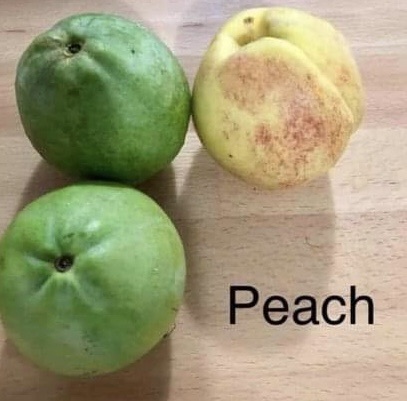
Psidium guajava 'Peach'
Psidium guajava 'Peach' is a unique cultivated variety of the well-known guava, developed in Turkey. This cultivar produces striking, aromatic fruits that resemble peaches in both shape and flavor — offering a delightful twist on the traditional guava experience.
Care and cultivation are similar to that of standard guava plants: a bright, sunny location is preferred, with warm temperatures and a well-draining, slightly moist substrate. Regular watering and fertilization during the growing season are recommended.
For overwintering, Psidium guajava 'Peach' should be kept at temperatures above 10 °C (50 °F). Cool, bright rooms are ideal for its winter dormancy. The plant tolerates pruning and can be shaped if necessary.
This extraordinary variety combines the exotic freshness of guava with a distinct, peach-like character — a true gem for collectors and lovers of rare fruits!Psidium guajava 'Peach'
Psidium guajava 'Peach' ist eine besondere Zuchtform der bekannten Guave, entwickelt in der Türkei. Diese Sorte trägt auffällige, aromatische Früchte, deren Form und Geschmack an einen Pfirsich erinnern – eine reizvolle Alternative zur klassischen Guave.
Die Haltung und Pflege entsprechen weitgehend denen anderer Guaven-Arten: Ein heller, möglichst sonniger Standort wird bevorzugt. Die Pflanze liebt warme Temperaturen und ein durchlässiges, leicht feuchtes Substrat. Während der Vegetationsperiode sollte regelmäßig gegossen und gedüngt werden.
Zur Überwinterung sollte Psidium guajava 'Peach' bei Temperaturen von mindestens 10 °C gehalten werden. Kühle, helle Räume eignen sich besonders gut für die Winterruhe. Die Pflanze ist bedingt schnittverträglich und kann nach Bedarf in Form gebracht werden.
Diese außergewöhnliche Variante vereint die exotische Frische der Guave mit einer neuen, pfirsichähnlichen Note – ein echtes Highlight für Liebhaber seltener Obstsorten!
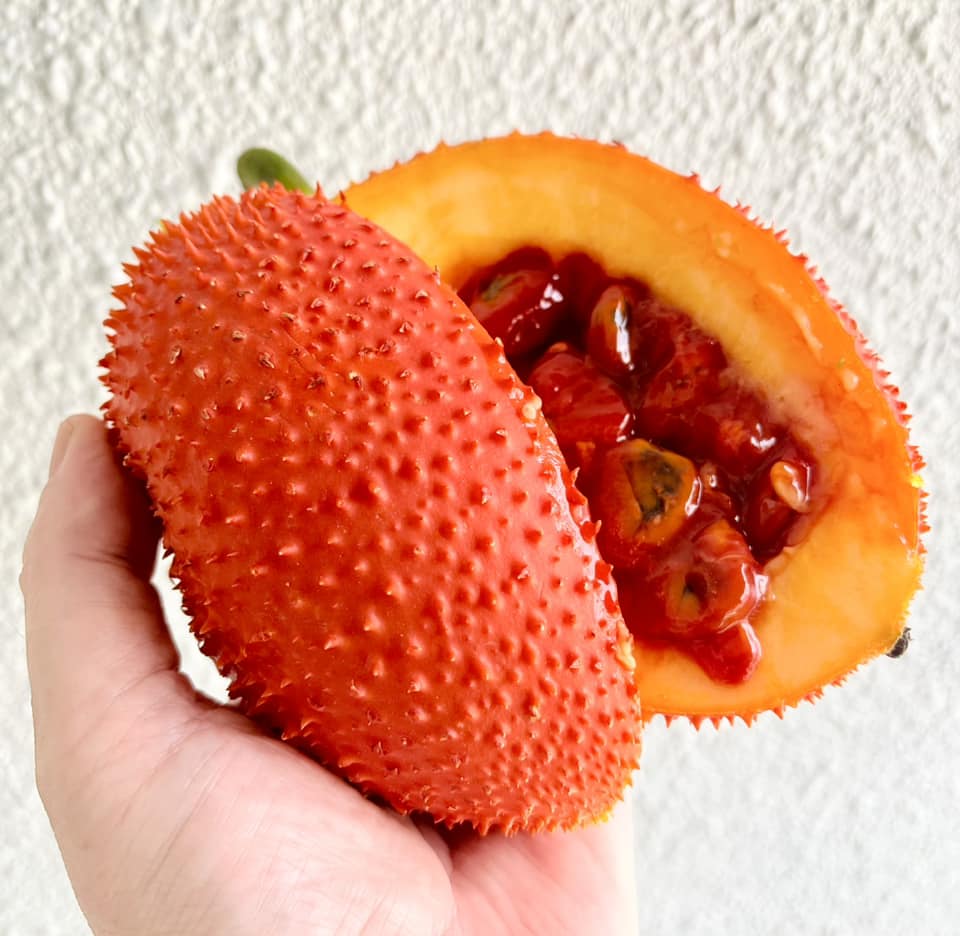
Momordica cochinchinensis - Gac fruit Family / Familie: Cucurbitaceae origin from / Herkunft: Vietnam Climate / Klima: temperate to warm (15-25C / 60-77F) / gemäßigt bis warm (15-25C / 60-77F) Taste / Geschmack: edible - healthy / essbar - gesund you buy / sie kaufen: 2 germinated seeds / 2 gekeimte SamenDelivery worldwideGac fruit is a climbing plant from Southeast Asia with beautiful, orange-red colored fruits.The dark red fruit jelly around the seeds is eaten.It is slightly sweet and very healthy.Please overwinter at a minimum of 10 degrees.Gac Frucht ist eine Rankpflanze aus Südostasien mit wunderschönen, orange-rot farbigen Früchten. Gegessen wird das dunkelrote Fruchtgelee um die Samen. Es ist leicht süß und sehr gesund.Bitte bei mindestens 10 Grad überwintern.
Red Holland Papaya (Carica papaya)
Family / Familie: Caricaceaeorigin from / Herkunft: ThailandClimate / Klima: temperate to warm (15-30C / 60-86F) / gemäßigt bis warm (15-30C / 60-86F)Use / Verwendung: juice, jam, ice cream, etc. / Säfte, Marmelade, Eis usw.you buy / sie kaufen: 1 small potted seedling / 1 kleiner, getopfter Sämling
Delivery EU onlyThis papaya is a Thai cultivar.The fruits have red flesh (similar to the Red Lady Papaya) and taste very good.This papaya is fast-growing and loves a bright, sunny location.Please acclimate it to the sun slowly.In winter, this plant should be watered very little and kept in a bright location.Please overwinter at a temperature of at least 15 degrees Celsius.Diese Papaya ist eine Züchtung aus Thailand.Die Früchte haben ein rotes Fruchtfleisch (ähnlich der Red Lady Papaya) und schmecken sehr gut.Diese Papaya ist schnellwachsend und liebt einen hellen, sonnigen Standort.Bitte langsam an Sonne gewöhnen.Im Winter sollte diese Pflanze sehr wenig gegossen werden und hell stehen.Überwintern bitte bei mindestens 15 Grad.
Bambara Groundnut (Vigna subterranea)Family / Familie: Fabaceaeorigin from / Herkunft: West Africa / WestafrikaClimate / Klima: temperate to warm (10-25C / 50-77F) / gemäßigt bis warm (10-25C / 50-77F)Taste / Geschmack: good taste / guter Geschmackyou buy / sie kaufen: 3 germinated seeds / 3 gekeimte Samen
Delivery worldwide
The Bambara Groundnut (Vigna subterranea) comes from West Africa and thrives there on poor and dry soils.The taste of these edible seeds is very tasty and full of protein and carbohydrates.The plant is an annual and creeps along the ground.The legumes grow underground.
Die Bambara Groundnut (Vigna subterranea) stammt aus Westafrika und gedeiht dort auch auf mageren und trockenen Böden.Der Geschmack dieser essbaren Samen ist sehr schmackhaft und voller Eiweiß und Kohlenhydrate.Die Pflanze ist einjährig und kriecht über den Boden.Die Hülsenfrüchte wachsen unter dem Boden.
Purple Forest Guave - Psidium myrtoides
Family / Familie: Myrtaceaeorigin from / Herkunft: South America / SüdamerikaClimate / Klima: temperate to warm (10-25C / 50-77F) / gemäßigt bis warm (10-25C / 50-77F)Use / Verwendung: edible fruits, juice, jam, ice cream, etc. / essbare Früchte, Säfte, Marmelade, Eis usw.you buy / sie kaufen: 1 potted seedling / 1 getopfter Sämling
Delivery EU onlyA beautiful guava with a unique flavor
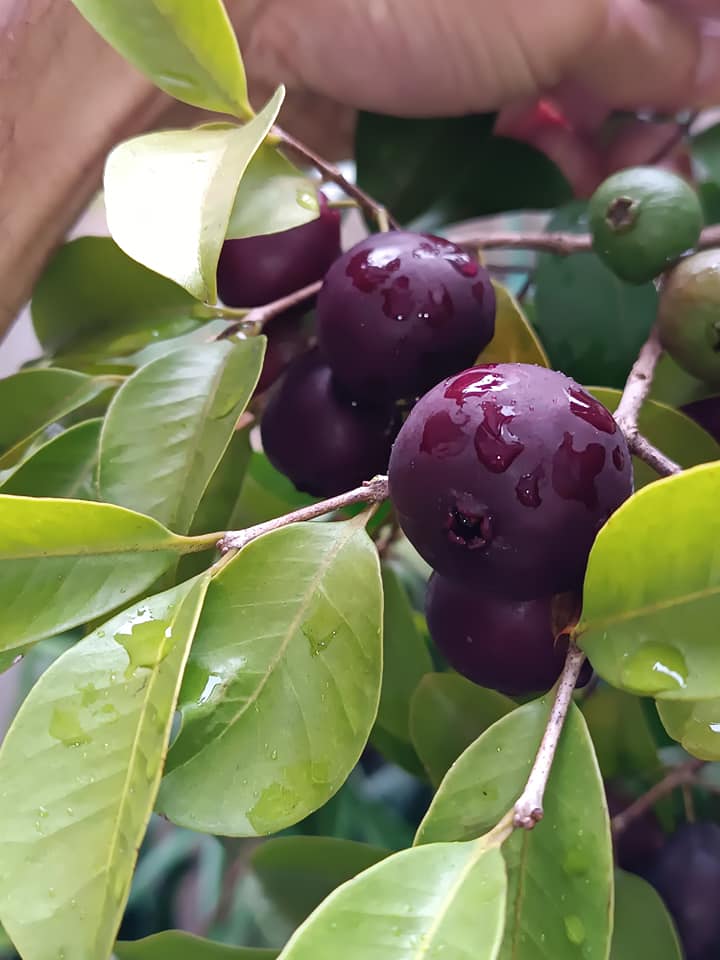
The Purple Forest Guava is a very special guava variety characterized by its beautiful, rather smooth leaves and striking dark purple fruits. The tree remains relatively compact in size, making it ideal for containers or smaller gardens.Unique, aromatic fruitsFruits: The dark purple fruits are not only a visual delight, but also have a unique, delicious flavor.Flavor: The flavor of the Purple Forest Guava is reminiscent of a blend of plum and grapes, with a subtle smokiness that offers an unforgettable taste experience.Uses: The fruits can be eaten fresh, made into juice, or used in jams and desserts.Growth and CareGrowth: This guava tree remains compact and manageable, growing only to a moderate height, making it ideal for containers.Light: Prefers full sun to partial shade and thrives in warm environments.Temperature: The plant should overwinter at a minimum of 10°C to remain healthy during the colder months.Soil: It prefers well-drained soil, ideally slightly acidic, and requires regular watering without waterlogging.
The Purple Forest Guava is an excellent choice for those with limited space, such as balconies or patios. It is easy to care for, and with its beautiful foliage and delicious, unusual fruits, it is guaranteed to be a highlight in any garden.Compact, aromatic, and easy to care for – the Purple Forest Guava is the perfect choice for anyone looking for an exotic fruit tree in a small space.Eine wunderschöne Guave mit einzigartigem Geschmack
Die Purple Forest Guava ist eine ganz besondere Guavensorte, die sich durch ihre wunderschönen, eher glatten Blätter und ihre auffälligen dunkelvioletten Früchte auszeichnet. Der Baum bleibt relativ kompakt in seiner Größe, was ihn ideal für die Kübelhaltung oder kleinere Gärten macht.Einzigartige, aromatische FrüchteFrüchte: Die dunkelvioletten Früchte sind nicht nur optisch ein Genuss, sondern haben auch einen einzigartigen, köstlichen Geschmack.Geschmack: Der Geschmack der Purple Forest Guava erinnert an eine Mischung aus Pflaume, Weintraube und einer subtilen Rauchigkeit, die ein unvergessliches Geschmackserlebnis bietet.Verwendung: Die Früchte können frisch gegessen, zu Säften verarbeitet oder in Marmeladen und Desserts verwendet werden.Wuchs und PflegeWuchs: Dieser Guavenbaum bleibt kompakt und handhabbar, wächst nur bis zu einer moderaten Höhe und eignet sich daher hervorragend für die Kübelhaltung.Licht: Bevorzugt vollen Sonnenschein bis halbschattige Standorte und gedeiht in einem warmen Umfeld.Temperatur: Die Pflanze sollte bei mindestens 10°C überwintern, um in den kälteren Monaten gesund zu bleiben.Boden: Sie bevorzugt gut durchlässigen Boden, idealerweise leicht sauer, und benötigt regelmäßige Bewässerung ohne Staunässe.
Die Purple Forest Guava ist eine ausgezeichnete Wahl für diejenigen, die wenig Platz haben, wie etwa Balkone oder Terrassen. Sie ist pflegeleicht und mit ihrem wunderschönen Laub und leckeren, außergewöhnlichen Früchten wird sie garantiert ein Highlight in jedem Garten.Kompakt, aromatisch und pflegeleicht – die Purple Forest Guava ist die perfekte Wahl für alle, die einen exotischen Obstbaum auf kleinem Raum suchen.
Litchi chinensis - var. Fei Zi Xiao
Family / Familie: Sapindaceaeorigin from / Herkunft: ChinaClimate / Klima: temperate to warm (10-25C / 50-77F) / gemäßigt bis warm (10-25C / 50-77F)Taste / Geschmack: very good taste / sehr guter Geschmackyou buy / sie kaufen: 1 potted seedling / 1 getopfter Sämling
Delivery only EU
🍃 Lychee 'Fei Zi Xiao' – Incomparable Taste, Pure Indulgence
Don’t compare this lychee to the ones you find in supermarkets during the holidays – this is an entirely different experience!
‘Fei Zi Xiao’ is a premium cultivar, renowned in Asia for its outstanding flavor and exceptional juiciness. It easily outshines common varieties in every aspect.
🍈 A Flavor Explosion
The skin stays green-reddish when ripe – unlike the usual bright red lychees
As soon as you peel it, you’ll notice the difference:👉 So juicy, it literally bursts open with nectar
Heavenly sweet flesh with a silky texture and unforgettable aroma
A rich, tropical flavor that lingers on the palate
🌿 Care & Wintering
This tropical fruit tree thrives in warmth and humidity.During winter:
Reduce watering – it prefers drier conditions
Keep at around 15°C (59°F) in a bright, frost-free location
A must-have for true lychee lovers – 'Fei Zi Xiao' delivers lush flavor and exotic charm like no other variety.
🍃 Litchi 'Fei Zi Xiao' – Eine Klasse für sich
Vergessen Sie alles, was Sie über Supermarkt-Litschis zur Weihnachtszeit wissen – diese Sorte ist etwas ganz Besonderes!
Die 'Fei Zi Xiao' ist eine exquisite Züchtung aus Asien und geschmacklich absolut außergewöhnlich. Sie zählt zu den besten Litchi-Sorten der Welt – ein echtes Feinschmecker-Highlight!
🍈 Fruchtgenuss der Extraklasse
Nicht rot, sondern grün-rötlich in der Schale – ein klares Erkennungsmerkmal
Schon beim Öffnen der Frucht zeigt sich der Unterschied:👉 Saftig ohne Ende – der Saft spritzt heraus!
Samtiges, süßes Fruchtfleisch mit himmlischem Aroma
Intensiver, frischer Duft und unvergleichlicher Geschmack
🌿 Pflege & Überwinterung
Diese tropische Pflanze liebt Wärme und braucht eine entsprechende Umgebung.Im Winter:
Weniger gießen – sie mag es dann trockener
Heller Standort bei ca. 15 °C
Ein Muss für echte Litchi-Liebhaber – 'Fei Zi Xiao' ist pure Exotik, Saftigkeit und Genuss auf höchstem Niveau!
Baguaçu (Eugenia astringens)
Family / Familie: Myrtataceaeorigin from / Herkunft: Brasil / BrasilienClimate / Klima: temperate to warm (10-30C / 50-86F) / gemäßigt bis warm (10-30C / 50-86F)Use / Verwendung: edible fruits, juice, jam, ice cream, etc. / essbare Früchte, Säfte, Marmelade, Eis usw.you buy / sie kaufen: 1 potted plant / 1 getopfte Pflanze
Delivery EU only
This rare Eugenia grows quickly.It has beautiful leaves and can bloom after just 3 years.The fruits are juicy and pleasant when ripe. The peel is slightly astringent.This Eugenia can easily be kept in a pot and is easy to care for.Please overwinter at at least 10 degrees.
Diese seltene Eugenia wächst schnell.Sie bekommt wunderschöne Blätter und kann bereits nach 3 Jahren blühen.Die Früchte sind saftig und angenehm wenn sie reif sind. Die Schale ist leicht adstringierend.Diese Eugenia kann leicht im Kübel gehalten werden und ist einfach in der Pflege.Bitte bei mindestens 10 Grad überwintern.
Cherry of Rio Grande var Gigante - Eugenia involucrata
Family / Familie: Myrtaceaeorigin from / Herkunft: South America / SüdamerikaClimate / Klima: temperate to warm (10-25C / 60-77F) / gemäßigt bis warm (10-25C / 60-77F)Use / Verwendung: edible fruits, juice, jam, ice cream, etc. / essbare Früchte, Säfte, Marmelade, Eis usw.you buy / sie kaufen: 1 potted seedling / 1 getopfter Sämling
Delivery EU onlyThese are seedlings from the largest Cherry of the Rio Grande fruits ever found.These fruits grow up to 3 cm wide and 5 cm long.This Eugenia comes from the southern Brazilian state of Rio Grande do Sul.The fruits of this Eugenia are very delicious and are consistently ranked among the best-tasting varieties.The flesh is juicy and reminiscent of a mix of pitanga, wild berries, and exotic fruits.This Eugenia is undemanding in its care and will even fruit in pots.This Eugenia is one of the cold-resistant varieties.In America, they survived -6°C (23°F). While they sustained some minor damage, they did produce new shoots.Nevertheless, please overwinter them at a minimum of 10°C (50°F).Das sind Sämlinge von den größten Früchten der Cherry of the Rio Grande die jemals gefunden wurden.Diese Früchte werden bis zu 3cm breit und bis zu 5cm lang.Diese Eugenia aus dem südlichen, brasilianischen Bundesstaat Rio Grande do Sul.Die Früchte dieser Eugenia sind sehr lecker und in jedem Vergleich werden sie mit bei den sehr gut schmeckenden Sorten genannt.Das Fruchtfleisch ist saftig und erinnert an einen Mix aus Pitanga, Waldbeeren und Exotik.Diese Eugenia stellt keine besonderen Ansprüche in der Haltung und fruchtet auch im Topf.Diese Eugenia ist eine der kälteresistenten Arten.In Amerika haben sie -6 Grad überlebt. Allerdings mit leichten Schäden aber sie haben neu ausgetrieben.Dennoch bitte bei mindestens 10 Grad überwintern.
Eugenia ligustrinaFamily / Familie: Myrtaceaeorigin from / Herkunft: Brasil / BrasilienClimate / Klima: temperate to warm (10-25C / 50-77F) gemäßigt bis warm (10-25C / 50-77F)Taste / Geschmack: good taste / guter Geschmackyou buy / sie kaufen: 1 potted plant / 1 getopfte Pflanze
Delivery EU only
Eugenia ligustrina is a small tree from Brazil.It grows relatively slowly in the first few years.The small fruits are sweet and pleasant to eat.
They are available with red and black fruits.The plant offered here will later have red fruits.Due to its size, this Eugenia is well suited for keeping in a container.Please overwinter at at least 10 degrees.
Die Eugenia ligustrina ist ein klein bleibender Baum aus Brasilien.In den ersten Jahren wächst er relativ langsam.Die kleinen Früchte sind süß und angenehm zu essen.Es gibt sie mit roten und schwarzen Früchten.Die hier angebotene Pflanze hat später einmal rote Früchte.Aufgrund ihrer Größe ist diese Eugenia gut für eine Kübelhaltung geeignet.Überwintern bitte bei mindestens 10 Grad.
Kei apple (Dovyalis caffra)
Family / Familie: Salicaceaeorigin from / Herkunft: South Africa / SüdafrikaClimate / Klima: temperate to warm (10-25C / 50-77F) / gemäßigt bis warm (10-25C / 50-77F)Use / Verwendung: edible fruits, juice, jam, ice cream, etc. / essbare Früchte, Säfte, Marmelade, Eis usw.you buy / sie kaufen: 1 potted plant / 1 getopfte Pflanze
Delivery EU only2 in 1 potI ate this fruit for the first time a few years ago in Sardinia.I didn't like it then. It was too sour and somehow not tasty.The plants offered here are from fruits that I got year before last.These fruits are really tasty. I didn't expect this difference.Apricot flavor with a pleasant acidity. Really very tasty.You can see how many differences there can be between fruits of one type.You should never judge a fruit too early.A juice made from these fruits tastes unique.There are male and female plants and also self-fertile plants.The Kei Apple comes from South Africa and grows there on the Kei River.The plants grow very quickly and are well suited to being kept in containers.Please overwinter at a temperature of at least 10 degrees.2 in 1 TopfIch habe diese Frucht zum ersten Mal vor ein paar Jahren auf Sardinien gegessen.Ich mochte sie damals nicht. Sie waren zu sauer und irgendwie nicht lecker.Die hier angebotenen Pflanzen sind von Früchten die ich im vorletzten Jahr bekommen habe.Diese Früchte sind wirklich lecker. Mit diesem Unterschied habe ich nicht gerechnet.Aprikosengeschmack mit angenehmer Säure. Wirklich sehr lecker.Da erkennt man wieviel Unterschiede es zwischen Früchten einer Art geben kann.Man sollte nie zu früh über eine Frucht urteilen.Ein Saft aus diesen Früchten schmeckt einzigartig.Es gibt männliche und weibliche Pflanzen und auch selbstfruchtende Pflanzen.Der Kei Apple stammt aus Südafrika und wächst dort am Fluß Kei.Die Pflanzen wachsen sehr schnell und sind gut für Kübelhaltung geeignet.Überwintern bitte bei mindestens 10 Grad.